

Quick Links
Breast Cancer Links
- Breast Cancer Overview
- Breast Cancer Resources
- IHC Atlas
- Clinical Case Reviews
- Spotlight Series
- Knowledge Check


Welcome to the new, updated HER2Know
We have expanded our .
Looking for the original HER2Know breast cancer resources?

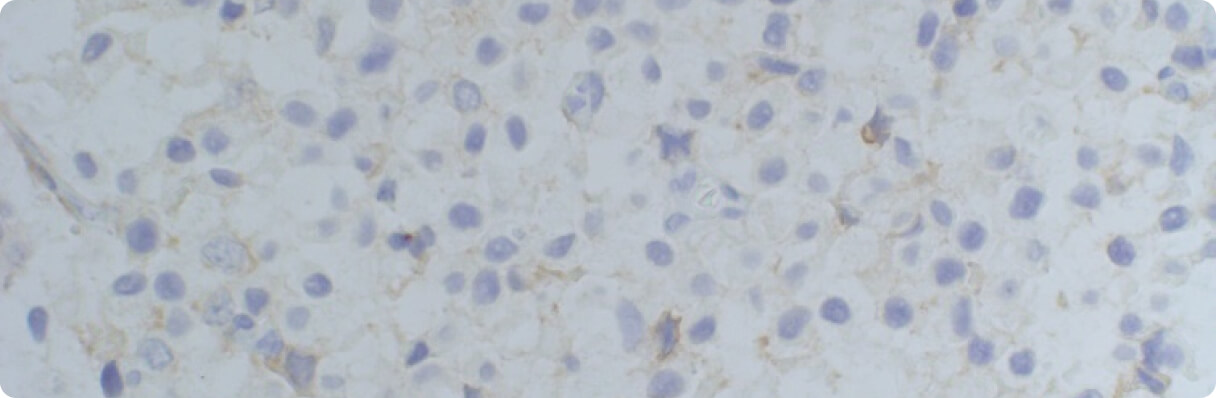
Thaer Khoury, MD, has been the Chief of Breast Pathology service at Roswell Park Comprehensive Cancer Center, Buffalo NY since 2019, and Vice Chair of Anatomic Pathology since 2021. In this article, Dr. Khoury, MD, reviews several different pre-analytic variables and their impact on HER2 IHC testing. Particularly focusing on cold ischemia, he discusses the negative impact that extended cold ischemic time can have on specimens and highlights the importance of following the ASCO-CAP guidelines to ensure standardized procedures.
Consistent and accurate breast biomarker testing is important, as the results are an integral part of the decision to treat patients with HER2 directed therapies over endocrine therapies decision making.1-3 Therefore, consistency in pathology practices, from specimen collection, handling, and processing is critical for reliable testing and treatment decision making.3 Pre-analytic variables including ischemic time (warm and cold), time in formalin (under-fixation, and over-fixation), type of fixative, antibody clone, and conditions/storage time of slides can all affect biomarker testing results.3 Warm ischemic time is defined as the length of time during surgery in which the blood supply is cut off while the temperature around the tumor remains the same.3 Cold ischemic time is the time between tissue removal and the initiation of formalin permeation of the tissue which should ideally be less than 1 hour.3,4 Furthermore, if the tumor is not directly exposed to formalin, the formalin takes time to penetrate to the tumor through the normal breast tissue; therefore, the cold ischemic time could be underestimated.3 Fixation time is the total amount of time a specimen is in a fixative solution such as formalin. The standard type of fixative is 10% neutral buffered formalin. Tissue is considered under-fixed if the fixation time is <6 hours, and over-fixed if the time is >72 hours.4 Additional factors that could impact HER2 IHC test results include the storage/shipping conditions if slides are being sent out for testing, and the time before starting staining as well as total time of tissue storage before testing.3,5
Most studies have evaluated the effect of the pre-analytic variables on the HER2 IHC testing based on classification of HER2 into negative, equivocal, and positive status.
“Since HER2-low (IHC 1+ or 2+/ISH-) has gained clinical significance, it is expected that effects of the pre-analytic variables on HER2-low status will be the focus of future studies.”
Current evidence suggests that pre-analytic variables may negatively impact HER2-low interpretation.3,6
The ASCO-CAP guidelines for HER2 testing have evolved throughout the years. There has been increased emphasis placed on pre-analytic variables, as numerous studies have proven their importance.4,7,8 The 2023 ASCO-CAP guidelines recommend cold ischemic time be as short as possible, and time in formalin between 6 and 72 hours.8 In my own institution, for core needle biopsies the processor is set up to a start time that ensures at least 6 hours in formalin, to comply with ASCO-CAP guideline recommendations. For resection specimens, the tissue is immediately serially sectioned upon receipt and immersed in formalin. If cutting the sample is not possible in the proper manner (serially sectioning and mapping), a pilot section from the tumor is taken. When a sample comes late on a Friday before a long weekend, the pilot section is processed to ensure time in formalin does not exceed 72 hours.
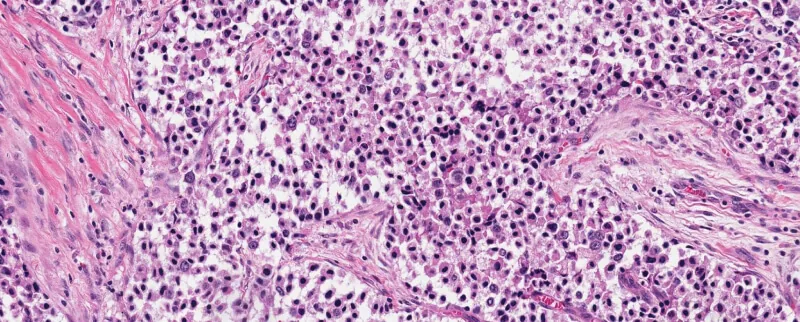
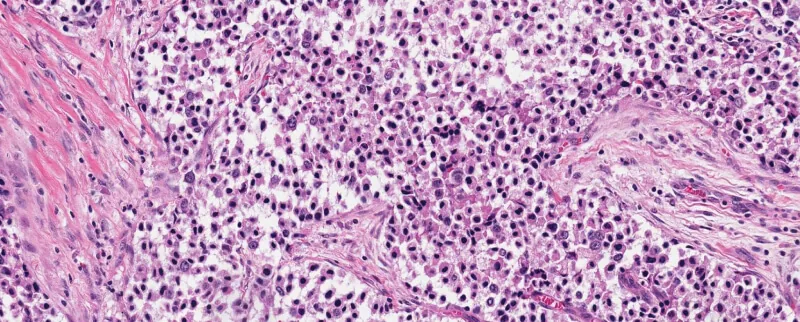
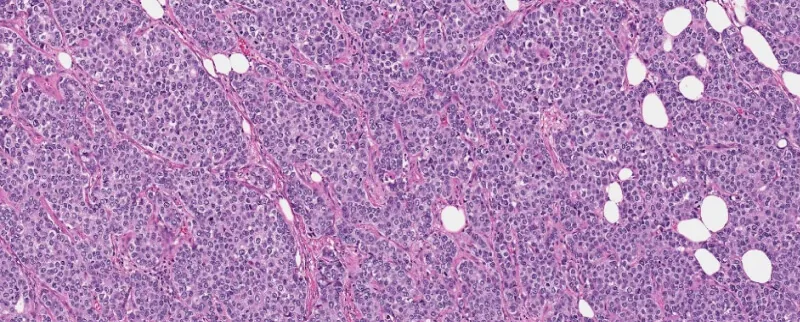
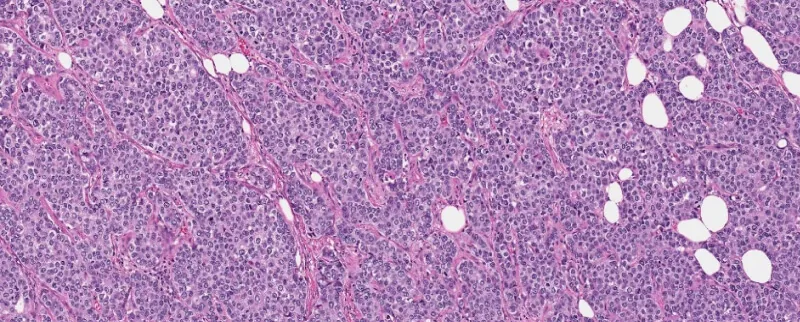
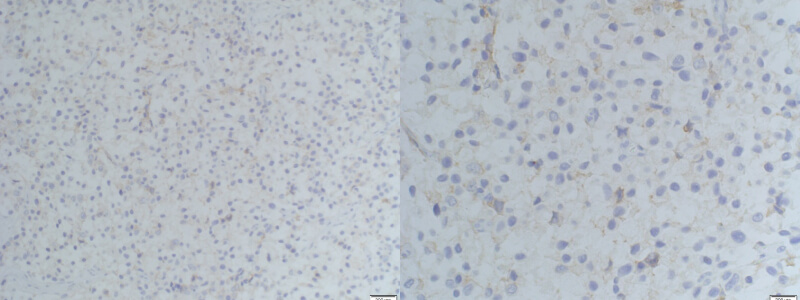
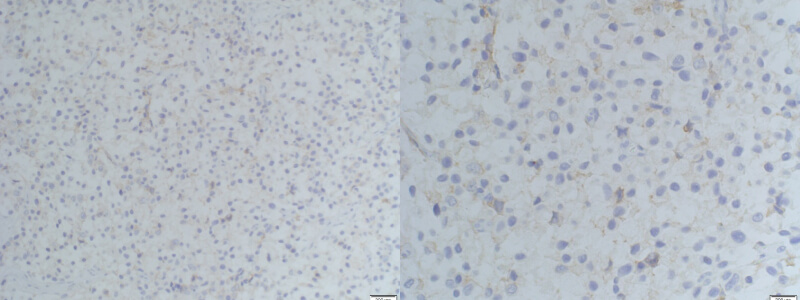
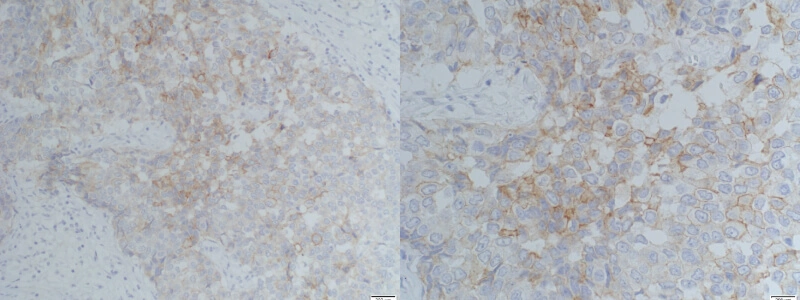
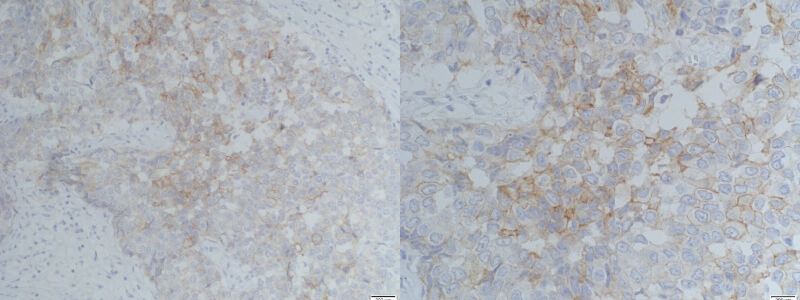
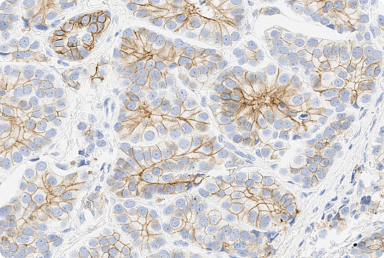
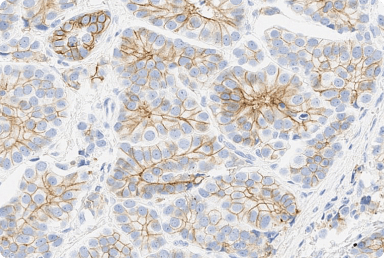
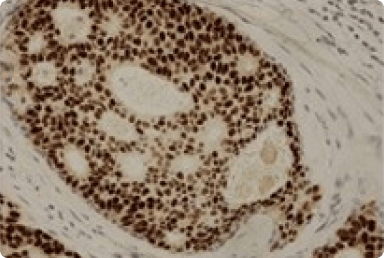
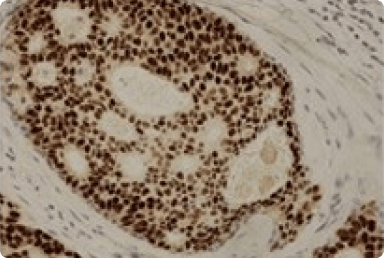
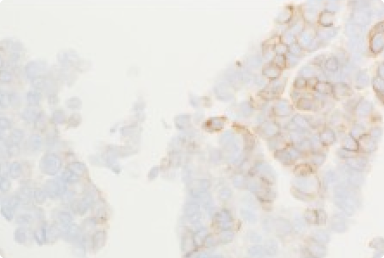
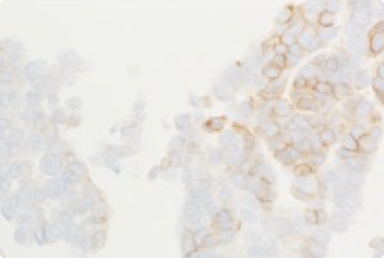
When the tumor is not exposed to formalin, such as during cold ischemic time, the cells undergo ischemic injury which leads to cell death or necrosis.1 This would trigger a cascade of events that degrades the protein and DNA (Figure 1-4).
“Studies have shown HER2 protein degradation demonstrated by one- or two-step HER2 IHC score reduction (i.e. from IHC 2+ to 1+, and from IHC 2+ to 0).”3,6
As for the DNA, two ISH methods have been tested, including FISH and D-ISH; these studies have demonstrated poor HER2 hybridization when FISH is used, and many artifacts when D-ISH was used.2,9 The key to recognizing poor fixation is the change in the histomorphology of the tumor – where the periphery seems properly fixed and the center shows necrosis, in which the cells become edematous with cytoplasmic vacuoles, and the nuclei show pyknosis, karyorrhexis, or karyolysis (depending on the degree of autolysis) (Figure 1 and Figure 2).3,10 IHC staining would also show variation between these zones (Figure 3 and Figure 4).
There are a number of key considerations when optimizing pre-analytic variables for HER2 IHC testing in my clinical practice:
ASCO, American Society of Clinical Oncology; CAP, College of American Pathologists; D-ISH, dual-probe in situ hybridization; DNA, deoxyribonucleic acid; FISH, fluorescence in situ hybridization; HER2, human epidermal growth factor receptor 2; H&E, hematoxylin, and eosin stain; IHC, immunohistochemistry; ISH, in situ hybridization.
1. Goldstein NS, et al. Am J Clin Pathol. 2003; 120:86-92. 2. Khoury T, et al. Mod Pathol. 2009; 22:1457-1467. 3. Khoury T, et al. Am J Clin Pathol. 2018; 149(4):275-292. 4. Wolff, AC, et al. J Clin Oncol. 2013; 31:3997-4013. 5. Omilian AR, et al. Appl Immunohistochem Mol Morphol. 2020; 28(4):267-273. 6. Yildiz-Aktas IZ, et al. Mod Pathol. 2012; 25:1098-1105. 7. Wolff AC, et al. J Clin Oncol. 2007; 25(1):118-145. 8. Wolff AC, et al. Arch Pathol Lab Med 2023;147(9):993-1000. 9. Troxell M, et al. Arch Pathol Lab Med. 2020; 144(12):1525-1534. 10. Rastogi V, et al. J Cin Diagn Res. 2013; 7(10):2408.
Did you find this content useful?
Help us get it right next time by liking this article


©2025 Daiichi Sankyo, Inc. and AstraZeneca
PP-US-8201a-2248, PP-US-8201a-1849, PP-US-8201a-2036, US-84238, US-93987, US-102659 11/25

Request an AstraZeneca Medical Affairs Representative Follow-Up
This website is intended to help healthcare professionals practicing in the United States find and access scientifically balanced, evidence-based, and peer-led information and professional resources in support of HER2 IHC evaluation. The dissemination of this information may be subject to different medical and regulatory requirements in other countries. This information is provided for educational purposes only. It is not intended for use in the diagnosis or treatment of individual patients. Are you a healthcare professional practicing in the United States?
I am a Daiichi Sankyo Company or AstraZeneca authorized person
This website is only intended for healthcare professionals practicing in the United States and authorized Daiichi Sankyo Company or AstraZeneca personnel. US Headquarters personnel and US Field Medical personnel are authorized to browse and search the database for their own background knowledge and insight. This website is not intended for use by US Field Sales personnel. None of the content of this site should be directly linked or distributed without approval.
